5 Steps to Plan Your Central Ohio Veggie Garden (#5 Gets Overlooked!)
February is the time for dreaming, planting ideas, researching and strengthening your roots for the coming year. While some folks assume the garden season in central Ohio comes to a dead halt in Winter, but this couldn’t be further from the truth at Columbus Foodscapes. We have been busily planning, designing, and fine tuning our methods to step into Spring stronger than ever! We’re guessing, you might be wondering how to plan your garden for Spring as too!

Now is the time to start planning your garden for Spring!
We’re here to provide steps on what you can do for your Ohio garden in the cold month of February. Maybe you’re dreaming of new veggies to grow, bright Summertime flowers, or the signature smell of fresh dirt in the Spring. While this all sounds beautiful, you might be asking where to start. In today’s blog, we’ll be discussing 5 steps to start planning your Central Ohio Garden in February. (Psst, if you’re already feeling overwhelmed, stay til the end of this article – we’ve got you covered with Garden Consultations)
This is the perfect time to sit down with your favorite pen, mug of tea, and hash out exactly what you want this year. Here are some steps to set up your Ohio veggie garden for success this year:
Step 1- Sun and Soil:
Sun: Determine which direction (NWSE) your yard is facing and start paying attention to where the sun is at its fullest. One really easy way to do this is by noticing where your snow melts on a sunny day and where it stays frozen. South facing gardens get the most sun, North facing get the least, East receive the morning sun and West soak in longer hours of afternoon sunlight. Other factors to consider include trees with large, shading foliage (Ex: Maple, Hackberry, Oak, etc.). These trees allow plenty of light through in the Winter, but shade an area in the Summer when their leaves are filled out.
Soil: While you can add compost and fertilizer to your soil throughout the year, Spring is a great time to work in a fresh layer of compost before planting for the season. Sourcing high quality sources of compost to work into your soil is important, and our personal favorite is Zoo Brew from Price Farm Organics. We recommend spreading a 2-3 inch layer of compost to the tops of your beds and working it into the soil a little with your hands, to allow the nutrients to break down and enrich the bed. Here’s a free compost calculator to determine how many bags you will need based on the size of your bed! Adding in compost helps with soil structure and moisture retention in the coming Spring.
Now that you’ve laid a foundation for your garden beds, it’s time to get into the fun part of deciding what to grow! Below are steps we recommend to get the ball rolling in plant planning:
Step 2 - Food: Start a list of food that you both love and want to eat fresh from your garden this year. What veggies do YOU like to eat? For example: While purple cabbages may look beautiful in your garden, maybe you just don’t like cooking with cabbage. (We promise, you’re not alone!) Could it be replaced by something you DO like? A favorite type of pepper perhaps? To lend a hand in this process, we’ve created a handy dandy list of where to source plants & seeds. You can download it HERE. (If you didn’t know, we have a resource page on our site with oodles of free garden tips for you! Check it out here!)
Step 3 - Spacing: Once you have your list of mouth watering food you want to grow, make a list of how much space each one needs. This can be a detailed process, and can even vary between species and cultivars.To lend a hand in this ticky tacky process, we’ve created a planting calendar, including dozens of plants you can grow in Ohio for your reference. Check it out HERE to get the ball rolling in your planning process. At Columbus Foodscapes, we practice intensive planting. This means we fill garden beds with as much food as possible and use a variety of techniques including succession planting, vertical gardening, interplanting and square foot gardening to maximize the space available.
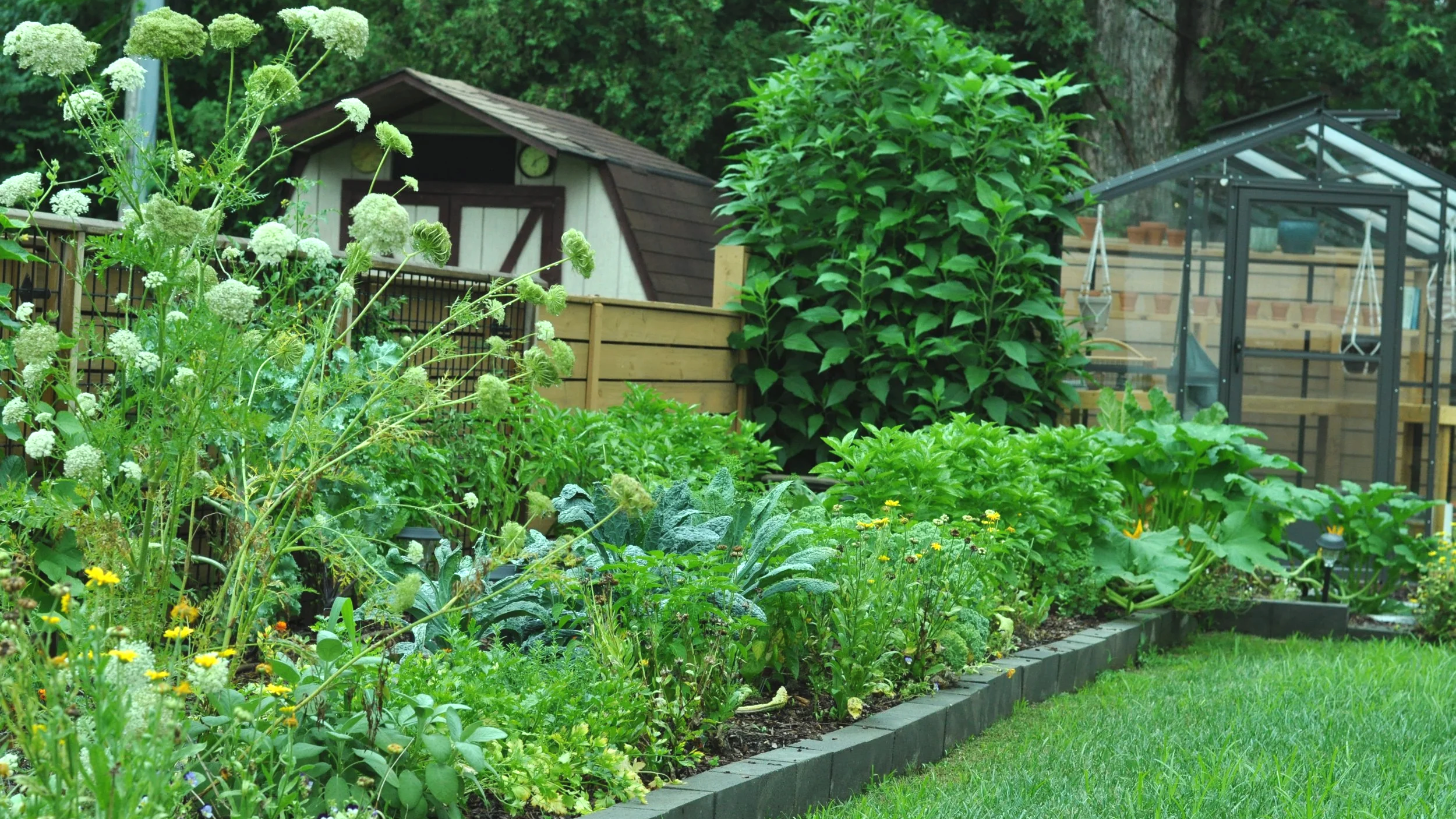
Pictured Above: A Columbus Foodscapes garden showcasing intensive planting with kale, calendula, perennial/annual herbs, squash, carrots and radishes. To further stretch the space, trellises are added to the fencing for climbing plants including tomatoes and cucumbers.
Step 4 - Companion Planting: Once you’ve decided which veggies you’re excited to grow, remember to add a few companion plants! In Central Ohio veggie gardens, companion plants are a great way to establish diversity, beauty and mutually beneficial relationships within your garden. While we believe that factors such as high quality soil, proper plant timing, appropriate sun exposure and attention are some of the most important features in your garden – companion plants can be the cherry on top to really make your garden bloom. Some classic companion plant combinations include:
Basil & Tomato
Cucumber & Dill
Carrots & Onions
Beets & Broccoli
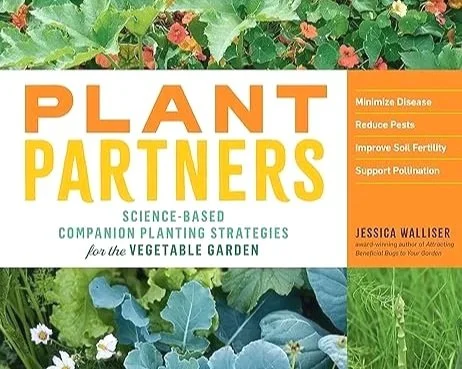
While there are some research-based claims, many “companion plant” charts are widely based on anecdotes. If you’re a bit of a science nerd like us, check out Plant Partners: Science-Based Companion Planting Strategies for the Vegetable Garden by Jessica Walliser and Dr. Jeff Gillman to dive deeper.
Step 5 - Mapping: Mapping out your vegetable garden can become a highly detailed process, but for the start of your season, we have two basic steps outlined on how to get started
Create Your Base Map: A base map is like a blank canvas for an Ohio veggie gardener. Generally set on a grid of 6 to 12 inch squares representing square feet, this is where you will sketch out the placement of your plants for the season. We recommend including the following details in your base map:
Raised beds and in-ground beds, to-scale, with dimensions (typically divided into 6 inch or 12 inch squares)
The cardinal directions: North, East, West, South
Any important perennials, both big and small: include trees, herbaceous plants, shrubs, everything!
Garden structures: trellises, rain barrels, archways, etc.
Other important notes: is there a spot where the soil stays consistently wet? Is there more shade on this side of the raised bed because of a large maple tree? Do the dogs dig in this bed more than the others? Is there an entry point that you want to be especially beautiful when you walk in?
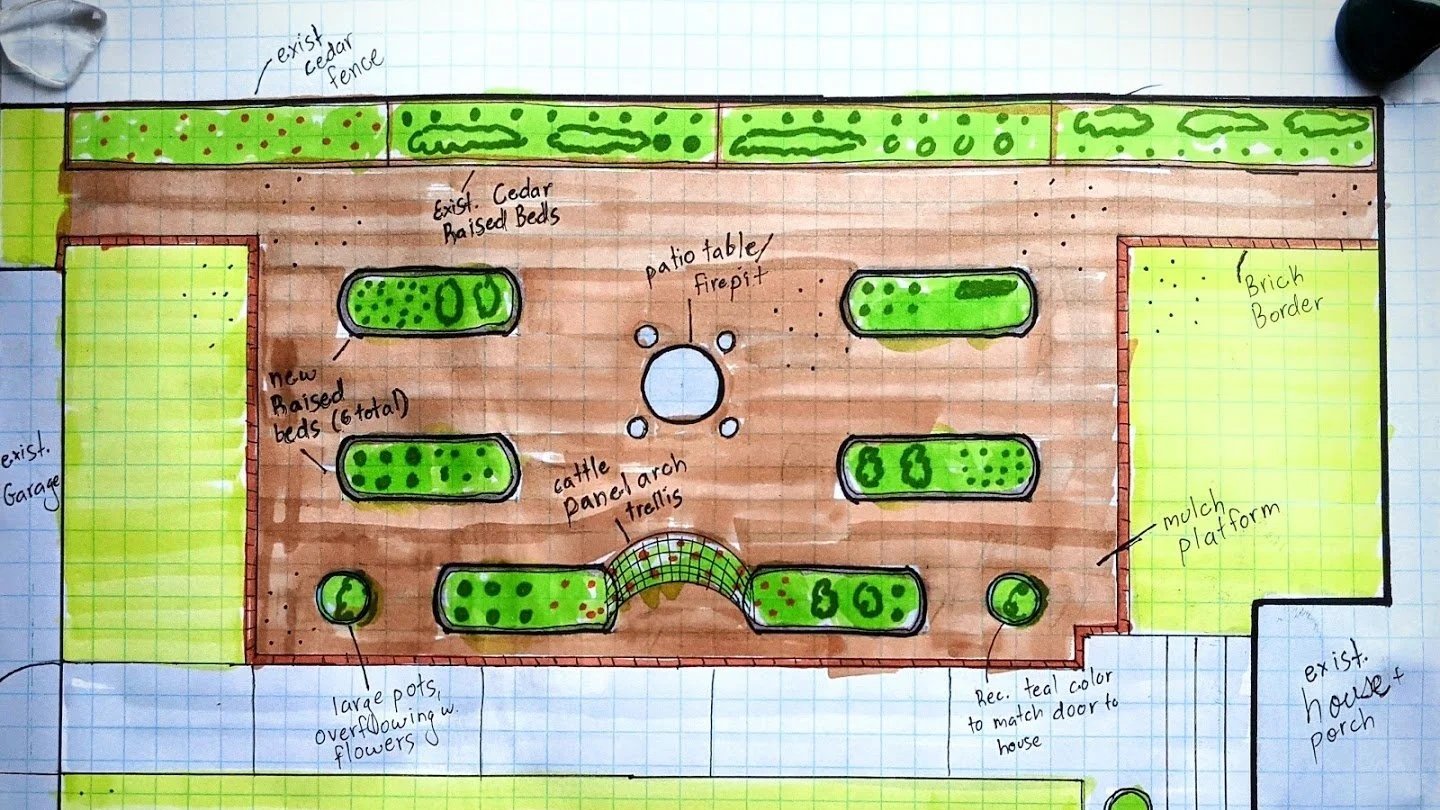
Pictured Above: You can hash out your garden plan on grid paper with pencils and markers, OR you can use software such as Canva to create grids to map out your space.
Place Your Plants: Quick reminder, placing your plants on a map is not set in stone. It is meant to be a quick foundation to reference as your garden continues to evolve and change through the season. Here’s the general order we like to go in when plotting plants on our map:
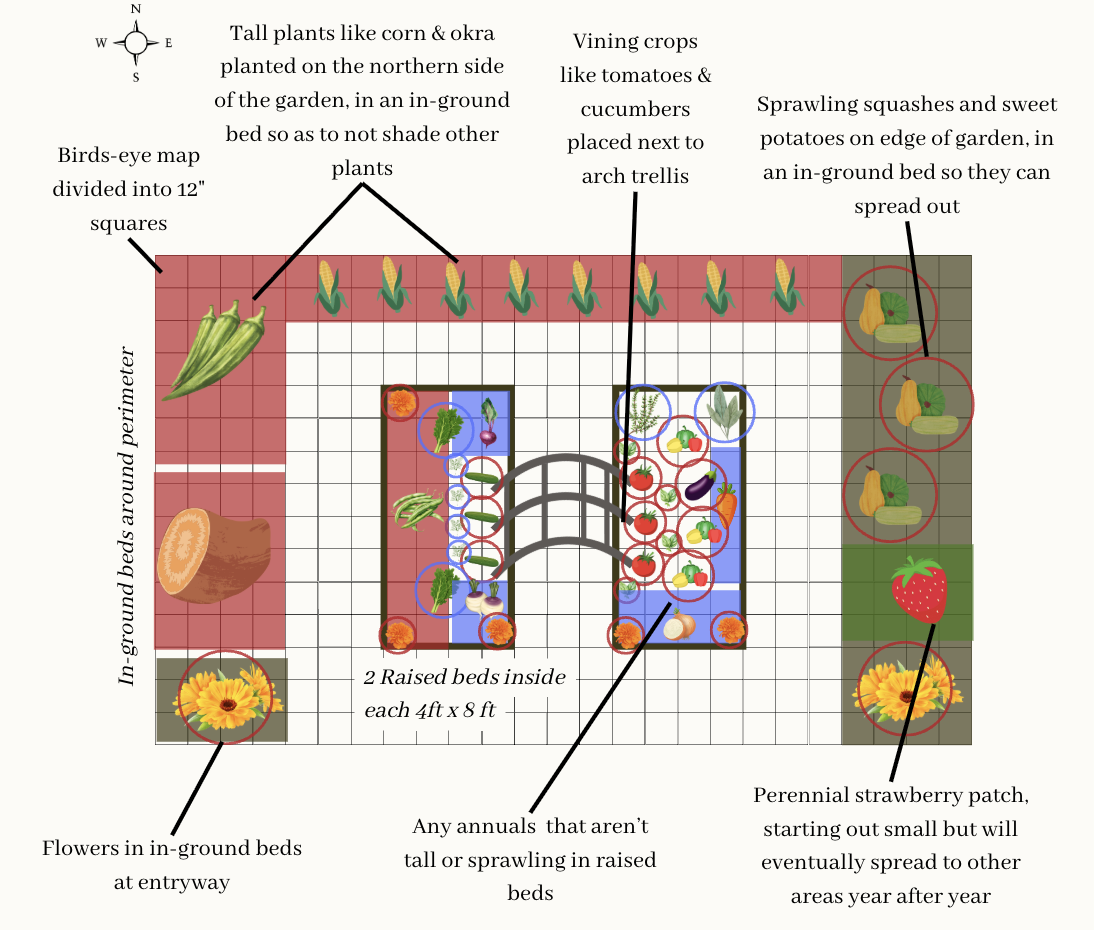
First, we plot plants that need trellis space (cucumbers, tomatoes, peas). Trellis space is precious and we want to prioritize using it for those that need it!
Plants that are tall that should go on the northern side of the garden, so as to not shade out others (like corn, okra)
Plants that we prefer to sprawl out go in-ground in its own patch, if soil allows, or on the corners of raised beds so it can grow into the surrounding area without taking up more raised bed space.
Medium-sized plants in the middle for easier harvesting (like peppers, eggplant, kale, collards, or brussel sprouts)
Smaller plants on the outside: herbs, short flowers like marigolds, radishes, carrots, beets, spinach, lettuces, and others
We recommend waiting until late March, when the soil is not frozen, before you start planting!
Below is an example of one of our planting plans with each square representing 1 square foot with notes on details such as trellising, succesional planting, spacing and companion planting.
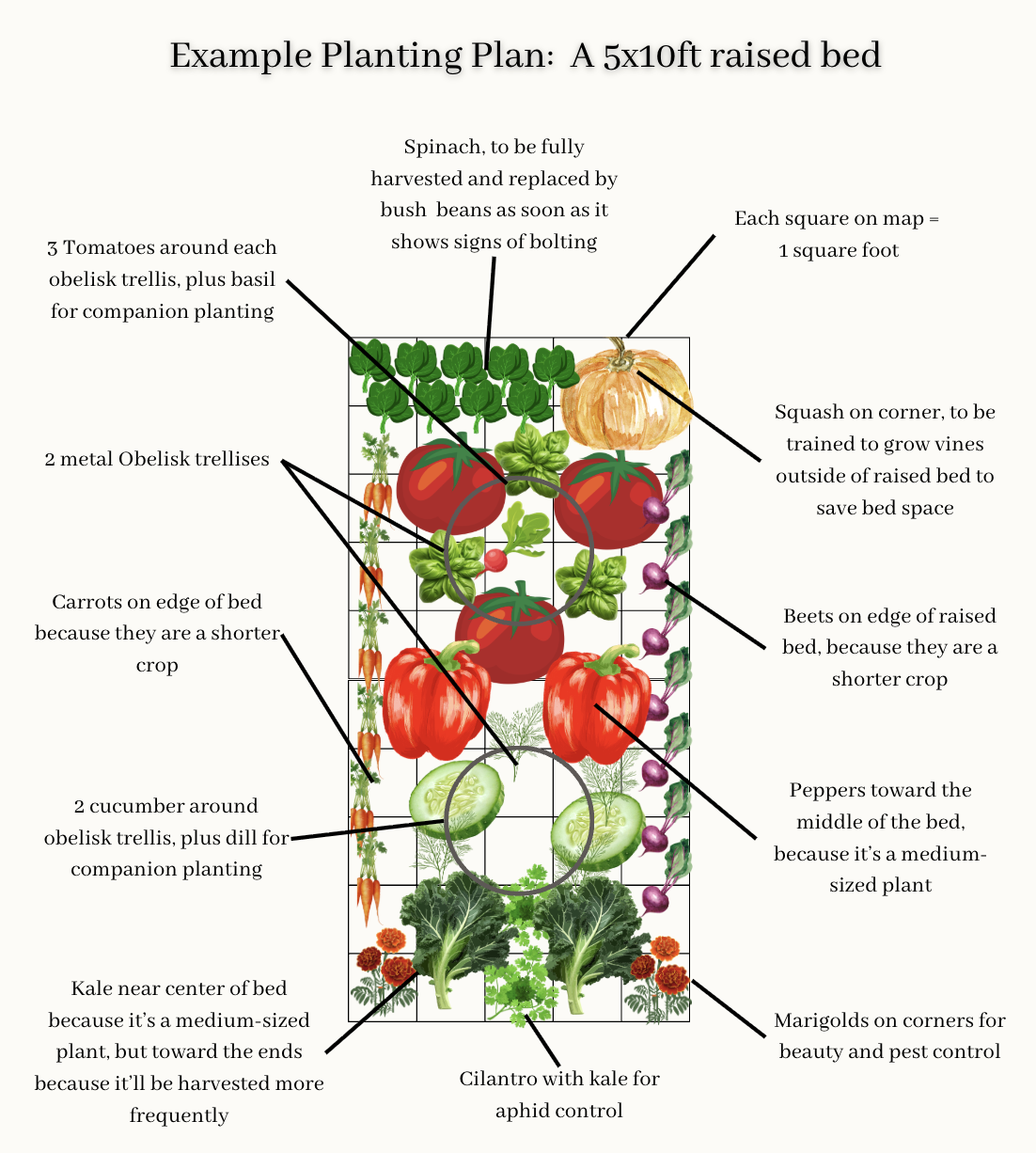
Pro tip: Your garden bed and plan will look different in each season as you successionally plant, harvest crops, and rotate out seasonally appropriate veggies. Keep your eyes peeled for upcoming blog posts about what to plant for each month in Ohio veggie gardens, on our site!
A phrase we like to say in central Ohio is “The Early Bird Gets the Garden!” Are you feeling overwhelmed by the crunch of Spring when dreaming up your Ohio veggie garden? Lucky for you, supporting Ohio gardeners is precisely what we center our work around at Columbus Foodscapes. By booking a Garden Consultation with us, we can help you get on track, answer any questions you have, and get you set up with a plan to make your vegetable garden the most abundant yet.
So what is in a Garden Consultation? It’s an in-depth & in-person 60-90 minute session that offers foundational gardening knowledge, a site analysis, and a services proposal designed to fit your budget and needs. Curated for both established and new gardens, we come with the expertise and know-how to help you transform your space and grow a bounty of fresh, organic produce in Central Ohio.
As February rounds the corner to March, we are stepping towards the rush of Spring. We highly recommend booking with us before our schedule fills far ahead and you miss your chance to prepare for the coming season. We’d love to see you out there, and look forward to growing with you this year!